Product Education
Calm vs Headspace for Sleep: Which Fits Your Night?
Both apps take sleep seriously, but they suit different nights — stories vs structure. How to choose for your bedtime, and when a sleep-only app fits better.
Both apps take sleep seriously, and both can be a good choice — the honest answer isn't "which one is better" but "which one fits your night." Calm leans on the largest library of bedtime stories and soundscapes; Headspace leans on structure: a wind-down, a path from lights-out to morning, and a dedicated exercise for 3 a.m. wake-ups. The right pick depends on what actually keeps you up — a racing mind, a noisy room, middle-of-the-night waking, or an app that's simply more than you want.
This guide compares the two only on sleep, using each company's own current feature descriptions (checked November 2026), then gives you a way to decide tonight based on the shape of your night — including the case where a meditation-app library is more than you need and a sleep-only app fits better.
🧭 What Actually Matters for Sleep in an App
Big feature lists hide the fact that sleep apps do four different jobs. Before comparing libraries, figure out which of these is actually your problem:
- A mind that won't quiet down. At bedtime, attention with nowhere to go reverts to worrying. Research on pre-sleep distraction found that people given a concrete imagery task fell asleep faster and had less distressing pre-sleep thinking than people told merely to distract themselves (Harvey & Payne, 2002) — which is exactly the mechanism a calm voice reading you a story or walking you through a wind-down exploits.
- A room that won't stay quiet. Sudden noise changes pull you toward wakefulness even when you don't remember waking; steady sound helps by masking, not by magic (Sleep Foundation). We compare the evidence for sleep sounds honestly in sleep sounds for adults.
- Middle-of-the-night waking. A different problem from falling asleep — you're already past the wind-down, and what you need is something that works with the lights off, no browsing required.
- Consistency. Sleep responds to rhythm more than to any single night (NIH/NHLBI). An app you'll actually open every evening beats a better one you open twice.
Keep those four in view. Now the two contenders.
🌙 Calm for Sleep: Stories and Soundscapes
Calm's App Store listing (checked November 2026) describes a sleep lineup built around two pillars:
- Sleep Stories — the company says it offers 100+ exclusive bedtime stories for adults, with new ones added monthly, read by familiar voices: Matthew McConaughey narrates "Wonder," Stephen Fry reads "Blue Gold," and there's a Bob Ross-themed "Happy Little Zzzs."
- Soundscapes and sleep music — nature sounds (ocean waves, heavy rain, campfire), calming music, and full soundscapes for relaxing and sleeping.
Around those pillars, the same listing mentions breathing exercises, mindfulness programs (Calm says some target insomnia and sleep cycles), and sleep session tracking that syncs with Apple Health. The app is free to download with some content free forever; the rest sits behind an optional premium subscription.
How this maps to your night: Calm is at its strongest when you want to be carried into sleep — put on a story, stop narrating your own thoughts, and let a voice with a beginning and an end occupy the mental channel worrying would otherwise use. The big soundscape library also makes it a reasonable choice if masking a noisy room is your main job. The trade-off of a huge library: you browse. If choosing among hundreds of options at 11:40 p.m. becomes its own activity, that's worth noticing.
🧘 Headspace for Sleep: Structure from Wind-Down to Wake-Up
Headspace describes its sleep offering as "a sleep app within our main app" (checked November 2026), organized around three stages: before bed, falling asleep, and staying asleep. Concretely, its sleep page lists:
- Sleepcasts — soothing stories that transport your mind to tranquil environments; named examples include Rainday Antiques, Cabin Porch, Cat Marina, Monsoon Hour, and Midnight Launderette.
- Wind downs — short pre-bed meditations, like the "Goodnight" Wind Down, that aim to take your mind "from racing to resting."
- SOS exercises — meditations designed for waking up in the middle of the night, such as the "Racing Mind" SOS Meditation.
- Sleep music and soundscapes, guided sleep meditations, and breathing exercises.
Headspace also describes a Sleep Health course and says its exercises are developed with leading sleep scientists — that's the company's own description, so treat it as marketing framing rather than an independent endorsement. The sleep page advertises a 14-day free trial; the app itself is a subscription.
How this maps to your night: Headspace is at its strongest when you want a path rather than a library — a defined wind-down, a defined sleep phase, and, unusually, a defined answer for the 3 a.m. wake-up. That last one matters more than it sounds: middle-of-the-night waking needs something that works immediately, in the dark, without decisions. The trade-off: Headspace's brand is meditation-first, so if guided instruction isn't your format, its structure can feel like homework.
⚖️ Side by Side: Calm vs Headspace for Sleep
Calm:
- Sleep signature content: Sleep Stories (100+, celebrity-narrated) plus a large soundscape and music library
- Organizing idea: browse a big library, find what suits tonight
- Best-fit problem: a mind that needs occupying (story) or a room that needs masking (sound)
- 3 a.m. wake-ups: soundscapes can serve this, but it's not a named feature
- Extras around sleep: breathing exercises, sleep session tracking synced to Apple Health
- Free access: free download, some content free forever, premium subscription
Headspace:
- Sleep signature content: Sleepcasts, wind downs, and middle-of-the-night SOS exercises
- Organizing idea: a three-stage path — before bed, falling asleep, staying asleep
- Best-fit problem: a person who wants structure, and a repeatable routine
- 3 a.m. wake-ups: a named, dedicated feature ("Racing Mind" SOS Meditation)
- Extras around sleep: Sleep Health course, breathing exercises, broader meditation platform
- Free access: 14-day free trial advertised on its sleep page, then a subscription
Prices change by region and promotion, and both companies adjust their plans, so check each app's current listing rather than trusting any article's numbers — ours included.
🎯 How to Decide Tonight
Skip the ratings and match the app to your actual night:
- You're exhausted but wired, and stories have always worked on you → the story-first experience (Calm's Sleep Stories, or Headspace's Sleepcasts) is your tool. The mechanism is attention replacement: concrete narrative occupies the mental space worries need (Harvey & Payne, 2002).
- Your bedroom is the problem — traffic, a snoring partner, thin walls → prioritize the bigger steady-sound library (Calm's soundscapes), and read what the evidence actually says about sleep sounds first.
- You fall asleep fine but wake at 3 a.m. → Headspace's named SOS feature is a genuine differentiator. Failing that, any pre-chosen, screen-free audio you don't have to think about will do — see our middle-of-the-night playbook.
- You want one repeatable routine, not a content library → Headspace's wind-down-to-morning structure fits; consistency is what sleep responds to (NIH/NHLBI).
- You don't want a meditation platform at all → that's the next section, because it's a real option.
A worked example: say your pattern is getting into bed on time but lying awake replaying the day — and twice a week you also wake at 3. The first problem is attention (story or wind-down territory); the second is a separate problem needing a separate tool. Pick on the dominant night, but make sure the app you choose handles both — for you, that could be Calm's stories plus Headspace's trial for the SOS feature, evaluated across a couple of weeks each.
🪶 Where a Sleep-Only App Fits
There's a third shape worth naming: both Calm and Headspace are meditation platforms with excellent sleep sections. If your only goal is sleep, a general library can be more app than you need — more browsing, more content you'll never open, another subscription for features you didn't want.
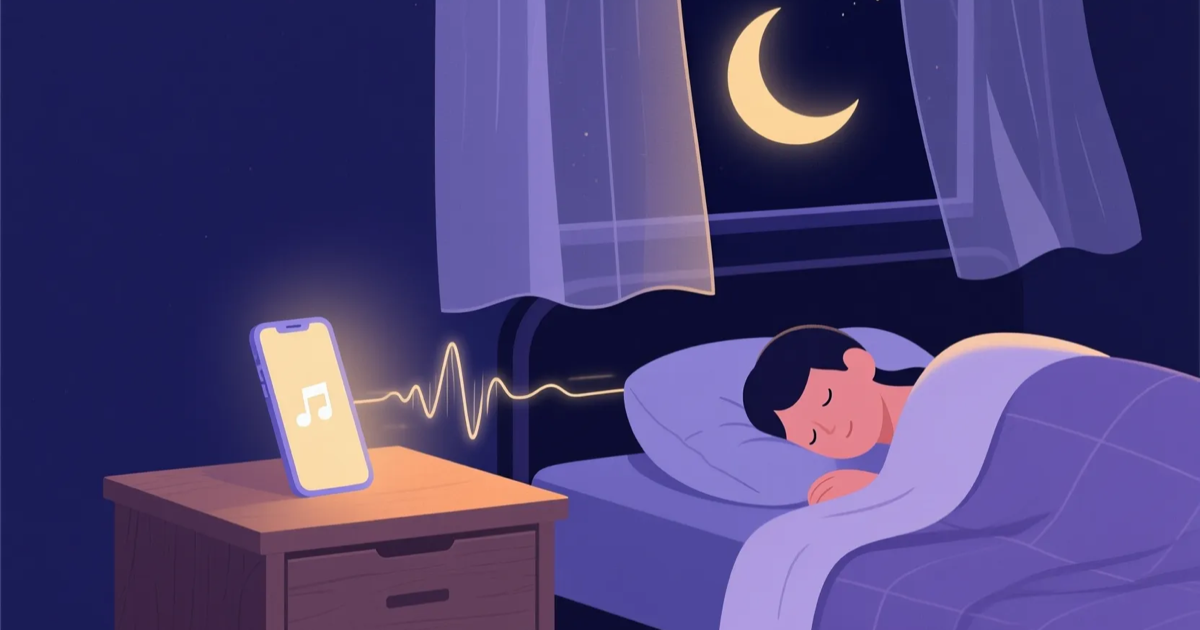
Sleep-only apps strip that away. Somvia is built around one ritual: choose a guide, press Start Sleep, and follow calming guided audio — breathing, body scans, guided imagery — that fades away naturally as you settle. There's no library to shop through at midnight, because every session exists for the same purpose yours does. It pairs the nighttime sessions with light daytime habit awareness (caffeine, stress, screens), on the idea that sleep doesn't start at bedtime. That's a different trade than either platform above — less breadth, less friction — and which trade suits you is a matter of taste, not a ranking.
If you're unsure whether guided audio even suits you, start with the concept-level question we've already covered: guided sleep meditation vs sleep sounds — which tool your night needs, independent of any app.
❓ Frequently Asked Questions
Is Calm or Headspace better for sleep?
Can I try Calm or Headspace for free?
Can I use Calm and Headspace together?
What about a sleep-only app like Somvia?
Are sleep apps a treatment for insomnia?
Keep Reading
Somvia
Sleep, Guided by Sound
Guided sleep sessions that set the pace for your wind-down and fade as you drift — with steady Sleep Sounds to keep the room quiet underneath.
Learn moreThis article is for general information and is not medical advice. If you regularly struggle to fall or stay asleep, consult a healthcare professional.